5 Red Flags in Fitness Advice for Women Over 35 (and What I Do Instead)
I saw another 30-day squat challenge today. Well, technically at the time of publishing this, it was three days ago but it doesn’t negate the red flags in fitness I saw lol. Bodyweight squats, every day, with an increasingly ridiculous number of repetitions and the suggestion that your glutes will become an entirely different situation by next month.
Listen, squats are fine. Building a habit is great. But some of these challenges are bullshit, specifically when they promise muscle-building results without giving you a thoughtful way to progress. That bothers me because the women following them are genuinely trying, and when the promised transformation does not happen, they assume they are the problem.
As a strength coach, bodybuilder, and travel advisor, I want your training to accomplish something beyond surviving an internet challenge. Maybe you want your jeans to fit differently, to pick up your kids more easily, or to enjoy castle stairs and a long sightseeing day without spending the afternoon wishing you had stayed at the hotel.
What should strength training for women over 35 include?
Effective strength training for women over 35 should include appropriately challenging exercises, a way to progress, recovery, and a routine you can realistically repeat. You do not need a gym membership to begin. Home-based training, including bands and bodyweight exercises, can improve strength and muscle when programmed appropriately.
The goal is a stronger body that supports your life, including the places you want to take it. One of the red flags in fitness that drives me batty is the idea that you can real strength or hypertrophy with randomness and no plan.
1. A challenge that promises more than it programs
A bodyweight squat challenge might help you practice movement and establish consistency. If you are new to training, those squats may truly feel challenging. I am not dismissing that starting point.
But eventually, the exercise may become easier. Your plan needs somewhere to go, whether that means added resistance, a harder variation, or an appropriate adjustment to volume. “Do even more tomorrow” is not automatically the best answer, especially when the challenge is sold as a complete transformation. AND the plan needs to be a program based in smart biomechanics and one that is personal to your goals!
I want your training to prepare you for real things, too. Castle steps, hills, getting in and out of rides, and standing up from that very low izakaya pub chair are better reasons to build leg strength than proving you can complete 200 squats in your kitchen.
2. One exercise or one food supposedly solves everything
“Just do hip thrusts to grow your glutes.” “Eat blueberries every day to melt belly fat.” Apparently we have decided one exercise and a punnet of berries can handle the entire human body. It is always the ONE secret, I stg.
Hip thrusts can be useful (and yea, I do program them A LOT), and blueberries are lovely. Neither is a complete strategy. Strength programming should account for your goals and train more than one movement, while weight management depends on your overall eating pattern and energy balance, not a magical ingredient.
I look at the bigger picture. What do you want to do? What equipment do you have? How are you recovering? Whether your goal is stronger legs or enjoying a Highlands outing, we need a plan rather than a shortcut. And I’m gonna say it: NO fitfluencer can do this for you no matter how good she looks and no AI can do this either.
3. A good workout is sold as the right workout for everyone is one of the biggest red flags in fitness groups I see
YouTube workouts are not inherently bad. A follow-along session can be a useful starting point, especially if you want to train at home. What bothers me is the suggestion that the same program will suit everyone, regardless of equipment, experience, goals, or available energy.
Your program needs to be something you can perform, adapt, and progress. Otherwise, you might be working hard without knowing whether the work is moving you toward what you want. And the program should always have a whole-ass macrocycle strategy. That is kind of my issue with apps and YouTube. That said, when you understand what health goals you are trying to reach and what physique you want, you can then supplement and build one-off days.
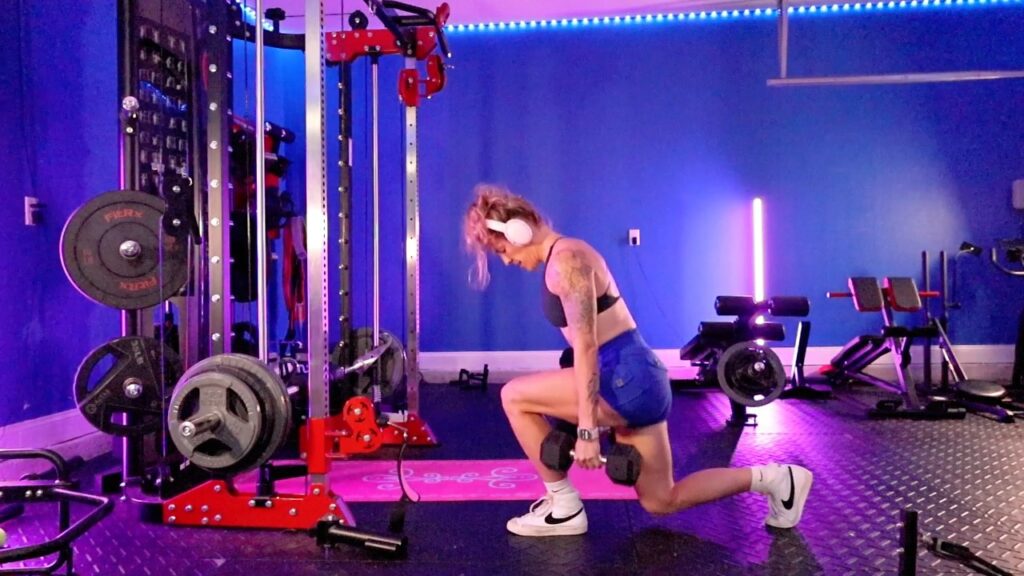
That is also how I want you to use my upcoming leg-training video for castle walking: as a useful session and a look at my coaching approach, not a promise that one workout will make every staircase effortless or that it will automatically build that booty because without the other pieces (other days I would program for you), the macros, the sleep, etc etc. it won’t!
Try this castle-walking leg workout!
4. You are told to go all in or eat dramatically less
Some clients believe they need an extreme calorie deficit, a gym membership, and an entirely different personality (really) before they can start. They do not.
A calorie deficit can support weight loss, but sustainability and preserving muscle matter. More restriction is not automatically better. I am a strength coach, not a registered dietitian, so I keep nutrition guidance within my scope and refer out when needed.
You also do not need to punish yourself for enjoying pastries in Europe or room service on vacation. I care about your training, energy, hunger, sleep, and consistency, not whether you were sufficiently miserable to deserve progress. Truly, even if you are competing, we have to keep a level of sanity!
5. Your plan ignores feedback and calls it discipline
Progression is an ongoing conversation. With online clients, I review their training tracker, weights, reps, energy, and sleep. Then I ask whether they could complete another rep or two with good form. In person, I also observe how they move.
This week, one client told me she could lift her kids overhead to help get them out of the car. Another was thrilled that her jeans fit differently. Those are meaningful wins, just like feeling more confident to put on that bikini on the cruise or more energetic on a hiking excursion or enjoying a longer walk.
Strong Anywhere™ is about building that capacity without making fitness another damn thing you have to perform perfectly. Your plan should support your everyday life and your adventures.
Want help building strength at home for the life you actually want to live? Book a fitness consultation to explore Strong Anywhere™ coaching and download your free home gym guide!