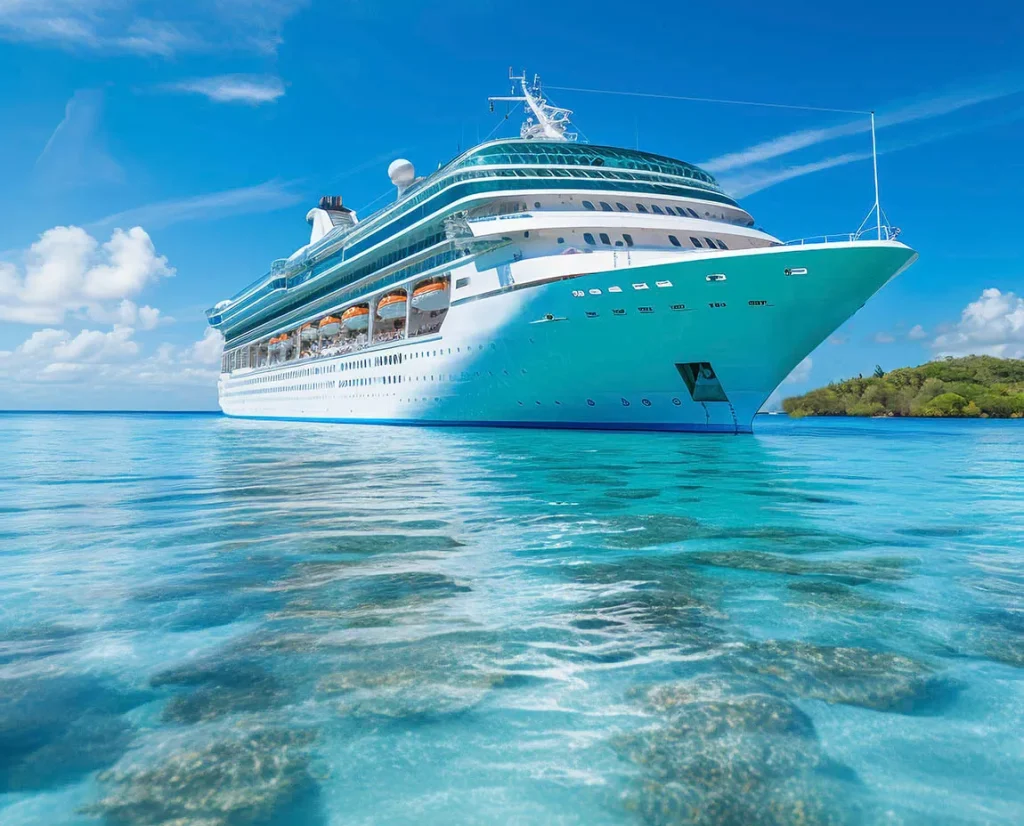
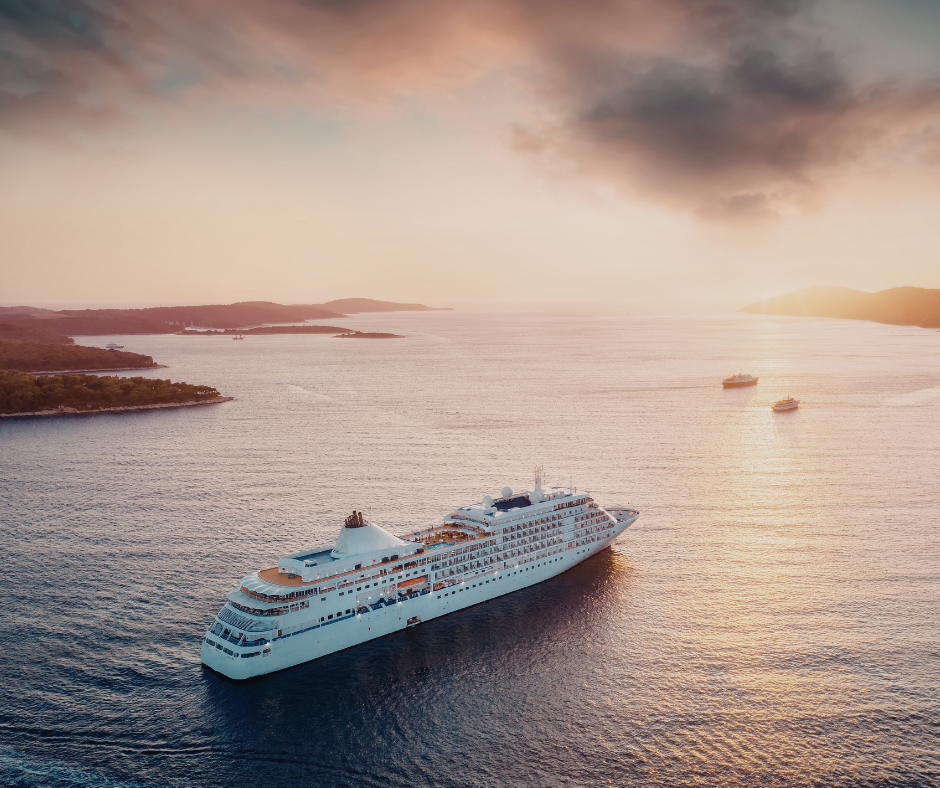
If you’re planning a Japan cruise extension to Hakone, you’re already thinking past the glossy itinerary page. As the 2027 luxury cruise season takes shape, high-end lines are stacking Japan sailings with peak-season depth. Regent Seven Seas has the Seven Seas Navigator running immersive round-trip sailings from Kobe. Silversea and other luxury lines are crafting multi-week routes through Yokohama timed to cherry blossom season.
What those extensions rarely address: the second you step off the ship, the “Post-Cruise Crash” begins. Days of curated maritime luxury followed by Japan’s high-energy ports and crowded hubs is a real transition…especially for high-achieving and neurodivergent travelers who are already running hot. That’s why I developed the Port+ Transition Japan method, a tactical framework for moving from ship to onsen town without burning out before you ever reach your first Ryokan. I mean the concept isn’t new per se but you catch my drift…PUN intended✨
Why Your First 48 Hours Matter for a Japan cruise extension
On board, your choices are curated: limited venues, filtered information, a contained environment. On land, your decision load explodes. Train lines, ticket machines, signage, noise, visual overload in Yokohama and Tokyo and it is all at once. For a nervous system that’s been quietly managing ship motion and social energy all week, that jump can be kinda brutal.
The Port+ Transition is built to defend your mental bandwidth from the first step off the gangway. You move into a sequence of low-demand logistics designed to create a soft landing, so by the time you reach Hakone or Kyoto, you’re already exhaling and it still feels like a VACATION. 🙌
The Backbone of Port+: Takkyubin and Low-Demand Rail
Two logistics pillars make this work: Takkyubin (luggage forwarding) and calm, curated rail or private transfers.
Takkyubin: Hands-Free from Port to Ryokan
Japan’s luggage forwarding services let you send your suitcases directly ahead to your Hakone ryokan or Kyoto inn, traveling with just an overnight bag. Bags are tagged at or near the port and typically arrive the following day on most mainland routes, with slightly longer windows for remote areas. Honestly, this is one of my VERY favorite things about Japan!
For a Japan cruise extension to Hakone, your heavy luggage is already waiting at check-in while you travel light, clear-headed, and completely unbothered by station crowds or train luggage racks. Japanese tourism resources consistently cite Takkyubin as one of the most convenient ways to move across regions and for good reason!
Calm Routes: Private Transfers and Reserved Rail
The second pillar is minimizing sensory load in transit. A private car from the Yokohama pier direct to Odawara, then a reserved-seat limited express like the Odakyu Romancecar toward Hakone. It’s scenic, comfortable, and completely bypassing Shinjuku Station after a week at sea. You still get the magic of Japanese rail without the chaos.
Port+ vs. Standard Cruise Extensions
| Feature | Standard Cruise Extension | Port+ Transition Japan Method |
|---|---|---|
| Luggage Handling | Dragging suitcases through busy stations | Takkyubin from port to ryokan; you travel with one small bag |
| Sensory Load | Group buses, loud hubs, complex transfers | Private transfer + reserved rail, minimal hubs |
| Cultural Depth | Crowded city-center landmarks and checklist stops | Early shift into onsen towns and quieter interiors |
| Nervous System | High decision fatigue, post-cruise crash by day two | Regulated pacing with built-in decompression |
Hakone: Why It’s the Ideal First Stop 🏔️
Hakone is one of Japan’s classic getaways because of its hot springs, Mount Fuji views on clear days, and a network of boats, cable cars, and mountain trains that feel like a gentle immersion into “Inner Japan.” It’s also roughly 1.5 hours from Tokyo-area gateways, making it the perfect first stop after disembarkation.
A typical Port+ approach to a Japan cruise extension to Hakone looks like:
Day 1: Disembark, hand off luggage via Takkyubin, private transfer to Odawara, limited express to Hakone, early check-in, zero agenda.
Day 2: Onsen time and low-stimulation wandering around Lake Ashi or forest paths.
Day 3+: Light culture. Go to some shrines, small museums, and short walks before moving on to Osaka, Kyoto, Tokyo for higher-energy touring.
The Onsen Reset: Recovery Science, Full Stop 🛁
Heather’s Note: The Science of the Soak As an ACE-certified trainer and yoga teacher, I treat onsen time as a physiological reset. After a cruise, your body has been quietly compensating for ship motion — that’s a real proprioceptive demand on your nervous system. The mineral-rich thermal waters of a Japanese onsen, particularly those high in sodium bicarbonate and sulfate, support a shift from sympathetic “fight or flight” mode toward parasympathetic “rest and digest.” Buoyancy reduces physical load by roughly 90%, which means immediate spinal decompression and a genuine vestibular recalibration. Combined with the mineral content traditionally associated with circulation and relaxation, the onsen delivers a recovery effect that makes the rest of the itinerary actually sustainable.
In Port+, the onsen isn’t a side activity imo. It’s the foundation! It’s spa day to the max!
FAQ: Making Your Japan Cruise Extension to Hakone Feel Effortless
How do I handle luggage from the ship to my ryokan? Use Takkyubin. You or your travel advisor (ahem ahem!) arranges a pickup point at or near the port, bags are tagged for your Hakone ryokan or Kyoto hotel, and they arrive typically the next day on most routes. You travel with one overnight bag and the ryokan holds everything else on arrival.
What’s the most sensory-friendly way to reach Hakone from Yokohama? A private car from the Yokohama pier to Odawara, then a reserved-seat limited express like the Romancecar toward Hakone-Yumoto. This skips Shinjuku and Tokyo Station entirely which are two of the busiest and most disorienting hubs for first-time visitors.
Is three days enough for a Port+ transition? Three days gives you a noticeable shift. A 5-day Japan cruise extension to Hakone and Kyoto is what I usually recommend: 2-3 days in Hakone focused on onsen and genuine rest, then 2-3 days in Kyoto with gently ramped-up cultural touring. This pacing matters most for high-achieving professionals and neurodivergent travelers who need low-demand time before the bucket-list moments actually land. And really, the flights to Japan are so long as it is…might as well enjoy a cruise in Japan AND quality land time without rushing through this beautiful country.
Come On In to My Living Room 🛋️✨
If you’re ready to stop white-knuckling your itinerary and actually experience your Japan cruise extension to Hakone as the reset it’s supposed to be, you’re my people.
Join a private community of travelers who take nervous-system-friendly luxury seriously.
👉 Join the Private Facebook Community: https://www.facebook.com/share/g/1AtGVudr2h/
Let’s Plan a Japan Wellness Vacation You’ll Love!
Everything about your vacation will be tailored to you!